Feeding the Light Within

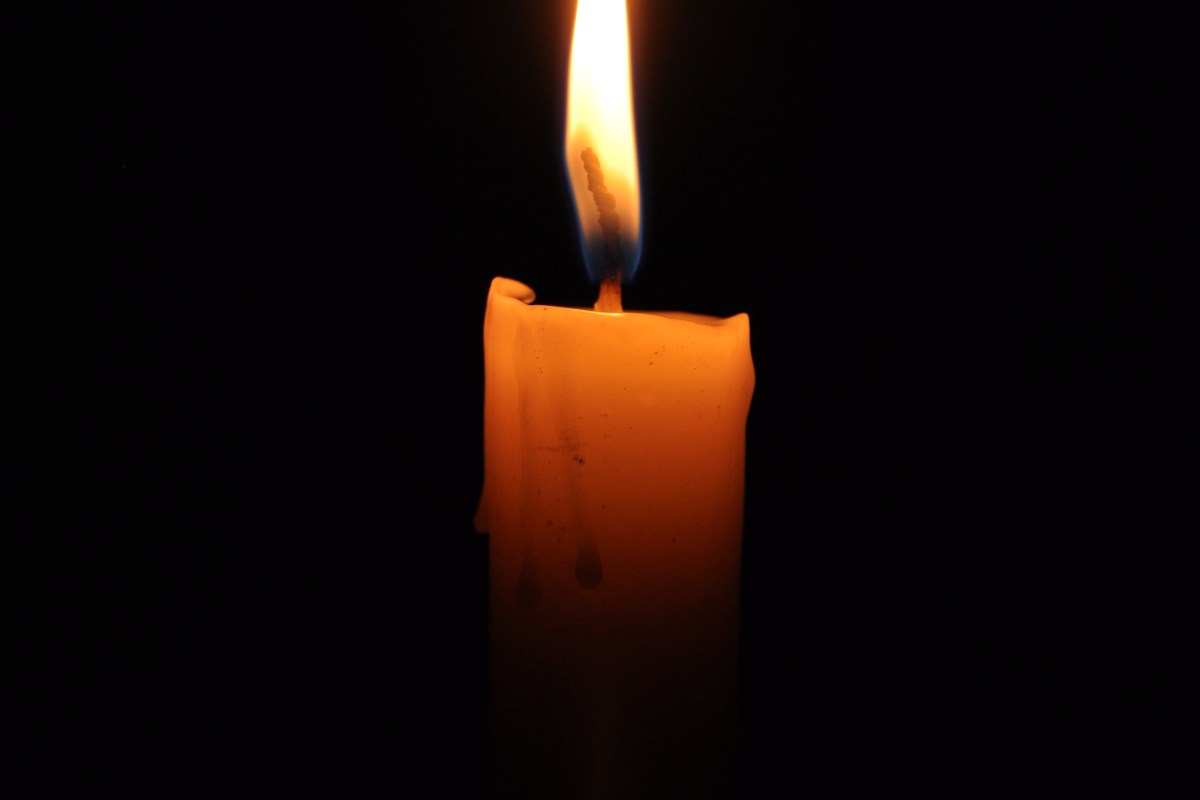
Like many of us, the past few weeks have been difficult in a way that I have never experienced before – a post-political state of broken-heartedness.   There is enough noise out there, enough being written and said that I can’t imagine adding to it right now in a meaningful way. Also, I feel weary. Actually, no – it’s not weariness so much as the clarion call to turn my attention inward and attend what my friend, retreat leader and spiritual guide calls the force of light within.  Like a candle trying to catch against the winds, I’m paused on the path and cupping my hands around a flame, the Spirit within, until the light is strong enough to bear it forward.

I acknowledge that the many of us who are feeling any emotional manifestation of fear or heartbreak on either “side” – whether it looks like anger, rage, withdrawal, denial, depression, or forced cheeriness – are feeling it from a personal place that speaks of our own basic goodness, individual story of loss and pain, and great capacity for love.

And all of that has really nothing to do with your politics. (Though it might have something to do with who you stand up for and extend kindness to now).

I have nothing to add to that – I just want to validate it. To validate you. I want to say that I see you, or am trying to, as best I can with my limited squinty vision and my teeny tiny issues. I see how you are trying too. You are buying Christmas gifts for people who you’ve just realized hold a different view of humanity than you (or maybe for people who you think are overreacting about views of humanity or are judging you); you are showing up at work or school where you feel alone and afraid (or maybe where you feel there is too much being made of feeling alone and afraid and you feel you are unfairly being labeled a bigot); maybe you are toggling the same emotions as me: taking sanctuary where my pummeled heart needs it, trying to stand with those who have been overtly threatened, and reading and listening outside my own worldview as much as I can, and eating EXCESSIVE amounts of dark chocolate and – in my darkest moments – crappy leftover Halloween candy. Maybe high fructose corn syrup consumption is where we find common ground and come together. Can we agree that Mike & Ike is for shit – even when you are desperate? Can we join together around the fact that this Halloween, of ALL freaking years, only Reese’s peanut butter cups should have been given out as a community service?

On top of my own heartbreak these past couple of weeks, there was added weirdness and a heightened sense of vulnerability when my last blog post went viral-ish. I hadn’t expected or intended that and, while I am happy that a message of empathy for those speaking out and protesting resonated, with the tens of thousands of views came some hate mail, negative comments, personal bashing to my credibility, intent and voice. All super normal for people who are public, but as a not-yet-before public person, barely limping along in my private life, not really believing what We The People were capable of… it felt destabilizing.

I’m better now – my shoulders are squared and I’m focused on the positive rather than the haters, which were so few to begin with, anyway. And I’m thinking about where we find common ground – spiritually, emotionally (and non-glucose related, ideally).   So my dear friends, those of you that participated in my call for the Child’s Pose of Power, Wisdom and Self-Actualization so many months back, and those of you who didn’t – I’m here with another interactive request:  tell me where you are finding solace and strength. One ground rule: Solace and strength of the heart and soul – not of the brain. Let’s challenge ourselves to focus, just for now, on where our hearts have felt restored and fortified.

I’ll go first:

  • Pantsuit Nation. I can’t link it here because many people need the privacy and safety it provides to share their beautiful AMERICAN stories of diversity and hope. If you would like to witness and share in this hope, PM me and I will add you. It regularly lifts my soul with how extraordinary ordinary people can be. You cannot read these individual stories, and the life-affirming comments that follow, and not be reminded of the goodness and resiliency within each of us.
  • Anne Lamott: God bless her. And I thank her for helping me find a back door to Christianity, where all are welcome. Beyond that, she keeps it real while offering an elevated perspective through the small things, the things that matter, by way of asking where do we start, then answering herself: “we start here, where our butts are.” Anne Lamott is the steak & lobster special for my heart.  Check out her latest here and here.
  • Maria Popova is the writer and editor of BrainPickings. Weekly, Popova concisely curates some of the best thinkers, writers and artists on what ennobles the human spirit – threading the relationships among hope, despair and the stories we tell ourselves.  Just this week, she profiled the beautiful work of Parker Palmer, helping us to see the redemptive light that comes through fissures of democracy, through Palmer’s Healing the Heart of Democracy: The Courage to Create a Politics Worthy of the Human Spirit. No more timely than right now, from someone who walked with John Lewis, who witnessed Selma, who knows.
  • Barbara Kingsolver, who not only gave us the Poisonwood Bible and Animal, Vegetable, Mineral, but just recently reminds us that hoping and hunkering alone are NOT enough; that we must better know and connect with our essential selves and beliefs and values, forming a personal agenda and bravely walking it out. How? She’s got some very specific direction on offer in a very recently published piece in The Guardian here and she’s checking me on my own tendency to ebb towards blithe politeness and fuzzy oblique trust in the greater good.
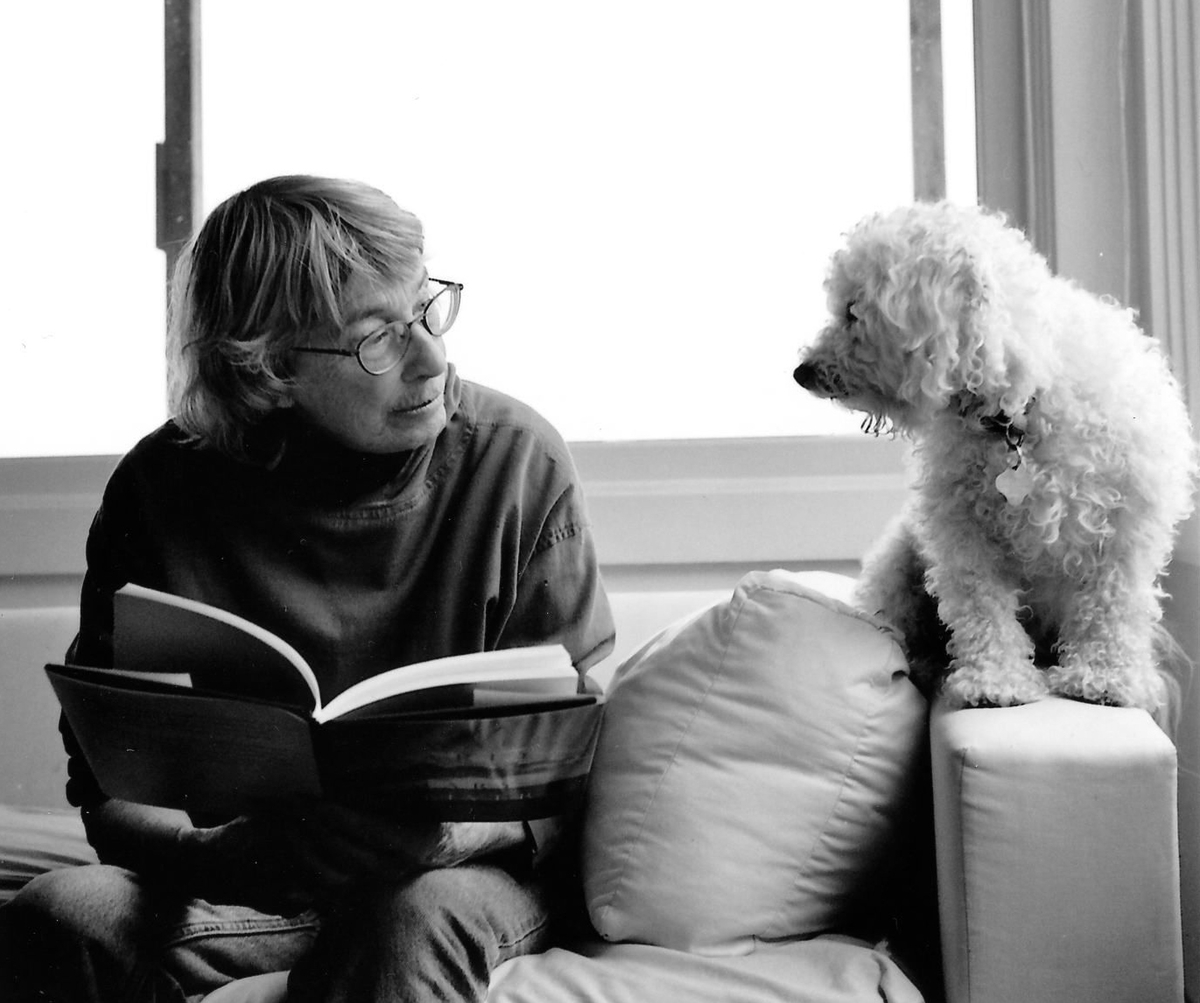
  • Before bed, right now, I’m reading a collection of Mary Oliver‘s essays entitled – appropriately – Upstream. She and I are walking in the pre-dawn light on the dunes outside Provincetown and the forests beyond suburban lights, chasing the copper flash of a fox on the snow and marveling at the spring’s trilliums, bloodroot, ferns curled tightly in on themselves.  She asks me on these walks, “Do you think there is anything not attached by its unbreakable cord to everything else?” and I look up from the page with a start, my heart opening, and opening again.
  • Above all, overall, I’m renewing my vows with books! Books are my greatest Sappho of all. One of my “bonus aunts” (how I love chosen family) sent me this WSJ article today and it’s reminding me that reading isn’t how I escape, it’s how I engage. “Reading books remains one of the best ways to engage with the world, become a better person and understand life’s questions, big and small.” I need to be reminded of that now, more than ever.

Tell me of your own list. What are you reading? Who’s feeding your soul? (Your soul, people – BEYOND the furtively consumed, stress-eaten Butterfingers and Nerds and Starburst). Let’s feed each other with the most nourishing stuff, the sort of dishes you’d want to bring to a diverse and eclectic, loving dinner party, to feed the sorts of people who would always give you your Tupperware back (with the matching lids).

What has expanded your heart and fed you during the past two weeks?

I feel that flickering flame behind my cupped palm, that Force of light, stronger now than when I began this writing — and growing stronger still.

If the protests have you confused or irritated …

… Then a clarification is needed: People are not protesting a Republican win via the electoral college.  People are afraid and their fear is real and legitimate.  What they are in fact protesting is the hate speech, the bigotry, the racism and the sexism that Trump’s campaign communicated, endorsed and even promised in policy terms.  They are protesting exclusion and acts of discrimination against marginalized and vulnerable groups (read: women, African-Americans, disabled people, LGBT, Mexican-Americans, Muslims, etc).  There are large groups of people, huge groups of Americans, who feel legitimately afraid for the lives, their liberties, their families and their futures.

That’s ridiculous and overreacting. Why would they feel that afraid?

Because the President-elect told them, expressly and explicitly, that those things are all in jeopardy.  It’s been pretty spelled out and continues to be signaled with a white nationalist Anti-Semite named his chief strategist yesterday. And then, when his more vocal supporters at his rallies shouted out even nastier and more hateful vitriol, he didn’t tell them it was inappropriate or not tolerated.  He often laughed and egged them on. Unlike John McCain’s beautiful example here of disavowing hate speech and racism from supporters during his 2008 campaign.

So Trump is President.  26% of America elected him President and that was enough.  The protesters, the people speaking out in pain and fear are not arguing that. We are in a post-election world now.  And it really doesn’t matter who you voted for anymore.

Let me stop here and say clearly:  If you are in my life and voted for Trump, I don’t believe you are a hateful bigot or a racist. I don’t believe that the mocking and demeaning language of his campaign about people of color, women, families with gay parents, a Muslim veteran KIA, and the disabled totally resonated with you and made you want to high five Trump.  Rather, I think you just overlooked xenophobic, homophobic, racist and misogynistic rhetoric because something else must have mattered more to you.

And all that matters right now is that if you believe in the equal value of all humans, in their basic human rights and liberties – then will you make your voice clear and tell them you will stand by those values and uphold respect for other humans?

What does that look like?

  • It could look like finding a way to tell a Muslim citizen who has been told they will have register and carry ID cards because of their faith or a hard-working immigrant who might face deportation, who fear violence or ridicule, (whose children are already facing shameful actions in the past week) that you want them to be safe. Can you agree to stand by their basic human right to feel safe?
  • It might look like telling my brother who’s on disability and Medicaid and might need a heart transplant in a few years – but won’t get it if he loses his health insurance – and millions of other lives that are similarly, truly on the line that you do care about the health of your fellow citizens, even those that can’t secure it from private insurance.
  • It might look like you telling my nephew who is so distraught because he identifies as disabled, and he watched the video clip of Trump crudely mocking disabled people, that you find that horrendous too and that’s not your America.
  • It might look you telling my friend’s neighbor whose crotch was grabbed Thursday by a man while he told her to “get used to it,” that that is unconscionable and wrong and you are so sorry it happened.
  • It might look like you telling my brilliant Indian-American doctor and actress friend, who faces discrimination in the South, and now says that she gets the message that America doesn’t want her – that we do want her and need her. … Or another dear Southeast Asian entrepreneur friend who was told by a yelling passerby on Saturday to “go home to her own country” … that she is home.
  • It might look like you telling my friend who is legitimately afraid her marriage will be legally overturned, her family destroyed, her child confused and brokenhearted that that is not okay and you will speak out when and if the vote comes.
  • It might look you telling my African-American friend’s brother who drives around with his license in the overhead visor so if he’s ever pulled over maybe he won’t be shot for reaching for his wallet – who now sees KKK celebratory rallies planned in North Carolina and racial epithets and swastikas painted all over Philadelphia – that his life matters.

We are not protesting the election.  We are not wearing safety pins because Hillary didn’t win.  We are expressing solidarity and strength and protection for these stories, these many many brothers and sisters. And for ourselves and our own basic humanity.  Do you have friends like these?  I’d wager you do whether you know it or not. Have you heard stories that have unfolded in the past 4 days?  The sharp rise in hate crimes since the election is being reported. Can you close your eyes and remove the colors red and blue from your vision and try on any one of these stories, like pulling on a sweater, to imagine what that kind of fear might actually feel like?  And if you don’t know particular people in your own life facing these issues, then maybe you could just make a blanket statement to say that your America is not one of discrimination, hate and exclusion. That you stand with those who believe in respect and dignity for all.

You could say it as simply as Richard Rohr does: “For the vulnerable who have now been rendered more vulnerable, I lament and pray and promise to stand with you.”

This is beyond politics right now.  If you are reading the protests as being about the election result itself, as sore losers, you are misunderstanding.  We would not be speaking out and on the streets were it a McCain win, a Romney win, hell – even Rubio or Jeb Bush or maybe even Cruz.  This is different than an Obama win in ’08 or ’12, or even W.’s wins in the two terms before. Americans’ basic human rights were not in direct threat in any of those scenarios.

If you want unity, if you want us all to move on, then try to understand what the protests are and are not about. Find in that understanding some empathy for the most vulnerable among us. And maybe find a way to say that demeaning, mocking, advocating for violence or a stripping down of personal rights and civil liberties is not what you endorse, and it’s not the person you are.

You don’t have to denounce your party or your vote.  But if you want credibility in telling us to move forward, you do need to reaffirm that everyone has a seat at the table (especially the many who were told during the campaign that they didn’t) and that you will actively help those who feel fearful and threatened.

Then call for unity. Then call for us to march forward. Unity means everyone.

Time Takes Time, and then some

“Expect anything worthwhile to take a long time.”

This is borrowed from the wise writer and podcaster Debbie Millman, and as if to further emphasize the point, this essay has stayed in gestation for a long while. Not that it’s any great strokes, but there is a good bit here I’ve been nibbling on. To be honest, it’s been more of a teeth gnashing that I don’t have veto power over the whole time-takes-time thing.

My impatience probably looks like yours, like many people’s. It’s applied in a non-discriminatory, blanketing fashion over everything from fitness to personal development and career goals to traffic. And like worry, it’s a totally ineffective emotion. I suspect that even when I press both palms flat against the dashboard, lock my elbows, lean forward and push from the passenger seat, it doesn’t make my husband drive any faster.

I yearn and seek and pine and push forward—and find yielding and waiting impossibly hard. Sometimes it’s the pushing forward that is called for, or to borrow from a friend, “Sometimes opportunity looks a lot like work.” My challenge is – I haven’t muscled up on learning when and where to downshift.

And – annoyingly for hoppy eager planner rabbits like me, knowing when to gear-shift and clocking the emergence of something worthwhile can sometimes only be viewed from the rearview mirror. When I moved back to my hometown in Shreveport, La., it was for a 2-3 year “tour of duty” for my husband’s career and to enjoy a slower, cheaper life while our kids were tiny. Coming to terms with grief over my parents, moving closer to a stronger marriage and bringing in a third child quickly moved onto the agenda, although they are line items that don’t show up on my resume and each was brought about by enough precipitating hardship that had I had a crystal ball I would’ve never put a toe across the Louisiana state line again. Just to be safe. Thankfully, the rear view mirror is sometimes the best one.

But it’s not that anything worthwhile takes any random, mindless stretch of time, right?   Like, just wait around and watch your favorite “stories” on TV until something brilliant drops in your lap. That’s the sort of banal thinking that gets cross stitched and hung in our great aunt’s bathroom, God bless her. No, I’ve been thinking about how, for me anyway, some portion of the terrain must be quality time.   That is, in the great arm’s length of a valley that brings about something worthwhile, that births something whole and lovely and new, there must be time and some of that time must be time in real connection with your own self.

I think this time can look like healing, like an endlessly long and desperate night of the soul, like silence, like contemplation, like being sick under your grandmother’s quilt while everyone is out playing in the sunshine, like taking a “forest bath” in nature, like sitting still and trying to listen and open. But essentially, it is time spent enlarging ourselves by going within.

In my life, it is where I stumble onto or create these quality pockets of communion time that I find meaning or move closer to my own truths. And often, inspiration for finding these times can be surprising and emerge from the ordinary. My friend J and I have been having a year-long conversation about how we move closer towards, and then through, grief. Not just the loss of someone, but the loss of part of yourself, a time or an attachment. We recently went to our local Dios De Las Muertos festival, a colorful, bright Day of the Dead festival with sugar skulls and paper roses and shrines that made us stop and gawk. There were shrines for everyone from “mama” to a beloved cat to Prince lining the park. And, unlike the sad-eyed saints with somber thin candles in the shrines of my Roman Catholic youth, these shrines featured funny pictures, magazine cutouts, Mountain Dew, movie tickets, a bag of Zapps potato chips – anything that was the whimsied or serious favorite of the person gone. Although preference seemed to be for the whimsy. They were raucous and joyous and funny! The kind of thing you might create on your best friend’s locker in high school just to embarrass her on her birthday.

I’d had on my mind a post I had seen earlier that day by a dear friend struggling on the one-year anniversary of her mother’s death, asking how do we all process grief? The anguish in the simplicity of her question caught my heart. Maybe here is a place to create intentional time, quality time by way of ritual, however borrowed. How might making a shrine for my own mom – as bright and playful as she was, with a Baby Ruth inside and those horrible butterscotch cookies she loved – lighten my own grief and bring her more into my daily life?

I need contemplative time for inspiration and meaning, but the “making” of life is walked out in millimeters every day. Most of the time, it feels and looks to me like nothing is happening or I’m just playing out a long repeated loop of putting away the groceries, responding to emails and calls and filling up the dog’s dishes. But the tedium of the days is the seedbed for creation and transformation.

Parenthood is rich with both the laundry and the heart swells. And it seems I rarely get both in equal share half the time. This is where the long view is important, especially when motherhood feels fundamentally at odds with creativity and sustained thought in real time.

But we take it as it comes, right? Whenever it comes. As Annie Dillard famously said, “how we spend our days is how we spend our lives.”

Last weekend, I went out to a friend’s place in the country for a Halloween hayride. The weather was beautiful and I hadn’t seen many friends in a while, but all I could manage to take in was the bonfire reflected my friends’ faces. There were too many kids running around us and needing food and attention (especially the highly verbal 40-pound one on my hip) to do any more than that. No real ability for conversation, to think through a few looming issues or dig into a big how-are-you-really conversation. We put hot dogs on sharpened sticks over the fire while the kids played chase in the pasture, bumping into our legs as base, and did our best to keep the beers and Sprites from knocking over while also not losing the wieners to the fire. All of which was challenge enough without attempting conversation. The older kids swung their legs over the edge of the porch and a few climbed a huge oak tree, creating a gauntlet of long tween legs like fringe along the short path to the table with the ketchup and Fritos. We gave each other little shoulder squeezes and hugs between the fray, placeholders on the heart. With my physical being focused on the kids and the fire, but my mind free, I watched these people I’ve come to love circling the orange glow of the bonfire, with their struggles both so near my own and so uniquely theirs. The stress of small children, the strains of marriage, the job uncertainty, the worries around possible moves. All this bound up along with the light and the October air, and as we all fed whatever children were near, whoever they belonged to, and kept the little ones away from the road, my heart nearly burst with love for these people who I can’t finish a conversation with.

After the hayride through the cemetery, my daughter, hopped off the tractor and said offhand – in efforts to impress her friends with how not scared she had been – “I want my money back!” I took her hand, “It was free. More than free – it was a gift.”

It’s all a gift – all free and unbidden, unsolicited, undeserved. And we take it where we can.

Right now I am picking up the gifts by living in the long arc of a mountain valley – domestically frenetic, intellectually and creatively hamstrung or slowed, pastured, rolling, lovely, tedious, and, for me, personally fraught with much interior work. I don’t know yet what meaningful thing is being born with this effort, but I am trying to keep my rabbit paws off the gear-shift to give it time, I am creating the pockets for silence and shrine making, I am wading through the granular details of the days.

I think in the time-takes-time equation, it’s one part quality, intentional time, one part quotidian daily tedious time, all multiplied by something far longer than I would like…but hopefully yielding something far greater than I can foretell.

The Art of the Enlightened Face Plant in 5 Simple Steps

When are the moments you really remember? Clearly remember, that is, with cellophane clarity and sharp-edged brilliance? For me – it’s either been when something was extraordinarily good, when something was extraordinarily bad, or when I was jolted hyper-awake, shaken into the present.

The first two cannot be engineered. We have to stand thigh-high in the rushing river and wait for whatever life floats past us. But the 3rd — awareness — can be cultivated. There’s a lot of advice on how to do this through mindfulness, meditation, breathing techniques or pranayama, which is all well and good, but suuuuuuper time-consuming (and potentially tedious). The short cut method to waking up to the present moment is to goad the universe into slapping you upside the head.

Now I try not to think of the universe as this frenemy that exists nearly exclusively to guide self-important white women aged 22-48 with subtle hints on whether to take calcium supplements or cancel cable. For example, it’s tempting to read two recent inquiries into my age as a sign from the universe to get serious about moisturizing. But like Jesus’ face on the toast, many interpretations are possible. And the universe is a busy lady. It also is true, however, that when I lose touch with myself, when the wheels come spinning off in my go-go-go modus operandi, the universe does have a funny way of presenting a well-timed face plant, designed to make me go from 90 miles per hour to a dead stop.

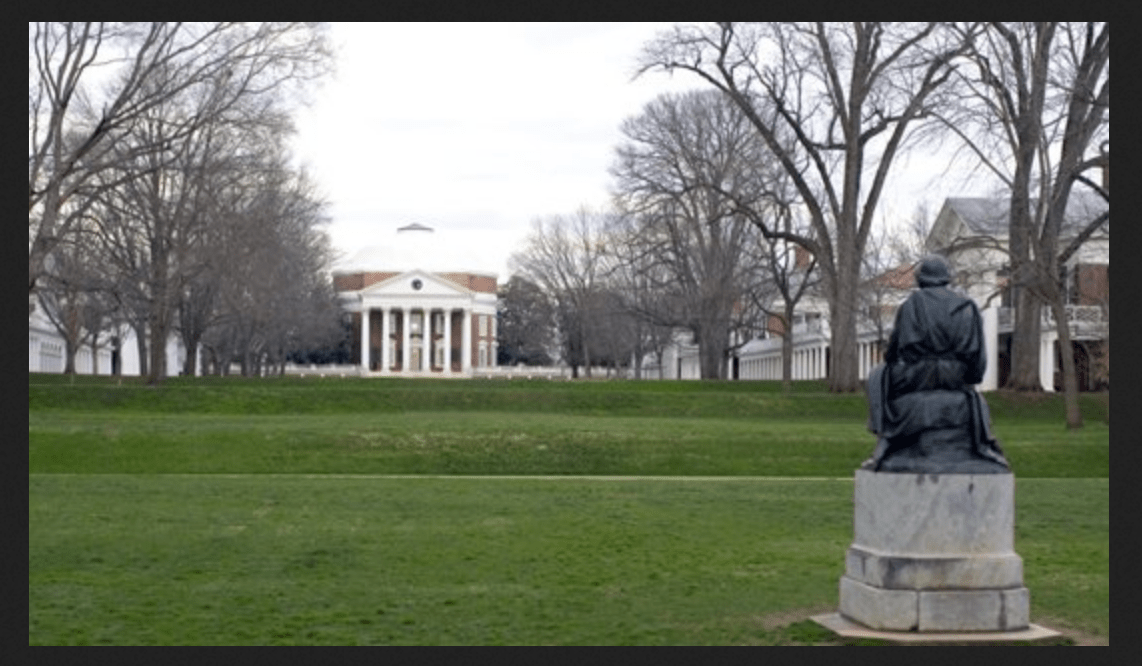
This happens bimonthly, sometimes weekly, in frequent little trips that catch me up short and make me laugh at how off center I have become. In short, they wake me up. Maybe the most illustrative example happened my senior year of college, running back to my room from the computer lab (when computer labs existed!) in the middle of the night. At the time, I was earnestly endeavoring to run off several wheels at once, finishing a second major I had added at the last minute, writing my thesis, working at a coffee shop and spending time with friends, all too aware of my fleeting remaining time on campus. And not surprisingly, there was some serious lack of self-care along the basic lines of eating and sleeping in the process. That year I lived on the “Lawn” at the University of Virginia, a rectangular quad that Thomas Jefferson had gently tiered from end to end to give the optical illusion of a flat horizon line. Running from the computer lab to my Lawn room meant cutting a diagonal across the Lawn – and in my haste, and the 2 a.m. total darkness, I had forgotten that about every 40 feet, the ground abruptly rose straight upward by three and a half feet.

screen-shot-2016-10-02-at-10-50-23-pm
In this view of the Lawn at UVA, you can see the gentle yet abrupt terraces.

I’m not sure it’s possible to impart just how surprising it is to be upright, vertical and running in the dark, then immediately come to a full stop, still standing, with a mouthful of dirt – without any visual heads up.

It’s very surprising.

I stood there (lay there?) leaning against the swell of the lower tier, still clutching my thesis manuscript to my wildly beating heart, eyeball to eyeball with the Rotunda at the far head of the Lawn and a wink of a crescent moon beyond. Everything was still. I rolled onto my back, spit out the grass and said, aloud, “Okay. I’m listening. What??”

Every face-to-ground episode since has been just an echo of this one. And each has been equally useful in helping me to slow down, wake up to the present moment, be aware of the life I am living.

I suppose it’s technically possible to gain that sense of clarity and aliveness by working to cultivate awareness within your self, logging in hour after tedious hour of meditation or silence or contemplative prayer. But why waste your own time, like a sucker, when you could prod the universe into delivering awareness with Task-Rabbit efficiency to your doorstep?   The abrupt stop with a mouthful of Bermuda grass is fast, efficient and effective as an on-the-go awareness delivery mechanism. It really can be that easy. So how do you achieve it without having to read any more Pema Chodron or Thich Nhat Hahn or listen to any more Super Soul Sundays on Sirius XM?

Friend, I’m glad you asked. In 40 years of intensive field research and empirical study, I have distilled below the five best practices to achieving your own vertical face plant – and accompanying turf-eating enlightenment.   I’ve tried them all exhaustively and I can attest — whether you adopt these methods individually or collectively, sequentially or by your own design — you’re sure to have the universe banging down your door, begging you wake the fuck up.

You’re welcome.

  1. Move rapidly, quickly everywhere. Do not do this for cardio or pleasure. Rush to hurry up and get somewhere quicker or get something over with faster. If the left lane is slower than the right, shift to the right lane. Scold the person in the passenger seat who reminds you you are about to turn left! Run from your car to the entrance of the grocery store. If someone speaks to you at the store, make your eyes darty and your face twitchy, assessing your exits. Respond to a backlog of texts while in the loo, or while a loved one is talking. Finish people’s sentences for them; they will appreciate you as a helpful human thesaurus and you will gain at least 4 seconds back. Hurry!
  2. Create, feed and maintain an outsized sense of yourself and your own capabilities. Plan a to-do list with this version of yourself in mind, taking care to add in line items like “incentivize kids to excel at math” and “better pursue passions.” Make sure you also build in expectations to make a difference in community activism, make more money, cook more organic food because it appears your daughter is starting to go through puberty at age 9, and deal with your own increasingly problematic muffin top. On each daily To-Do list, it helps to also draw a small box at the end of each line item that could be crossed off – or not – if accomplished. A sense of personal failure can greatly expedite the universe’s bitch slap.
  3. Win as many arguments in your head as possible. Think of it as a whetstone, or weightlifting bench, for your minimal free time, sharpening and strengthening your ability to enact step #2. Suggested mental adversaries include: your neighbors with leaf blowers, fellow classroom parents who bring elaborately crafted treats to school, and Fox News anchors.   Make sure to remind all fictional opponents of your importance and limited time. Find a way to bring up politics. Take things personally. Spend inordinate amounts of time imagining yourself more Tina Fey than Liz Lemon, mouthing your favorite lines in the car or walking to work. Using a bathroom mirror, develop a look that suggests a rich inner life and knowing wisdom, without smirking. Use all you learned about asking questions and leaning in with curiosity to manipulate your debater into thinking you are more grown up … then spike the ball like Kerry Walsh Jennings. Practice whirling on one heel. Realize a two-inch square heeled pump has the best visual impact with least risk.
  4. Insist on volume in your life. Do not let silence in, even for a minute, even at a red light. If you do, make sure it’s the sulky kind (see step #3), the noisy silence of resentment and self-recrimination. Make sure that any quiet moment finds an interior monologue to continue the adage “sound imposes a narrative on you, and it’s always someone else’s narrative.” Remember Louis CK’s bit on Conan about our urgent itch to distract ourselves from feelings of sadness and isolation. Then promptly forget it. At all costs, resist the fertile silence of awareness, pasturing the soul, calling up the difficult views of ourselves, watering new thoughts. This is not a bad thing – it’s just a different method, and one that will likely leave you confused and distracted at best, lost at worst. Dropping into a deep and reflective, observant silence is like a bucket down the well – dipping down within us to the place that is unbroken, unrushed, unseparated from the Divine. The trouble is – you do not know, you cannot know, how deep that well is, and what obstructions lie within. Why risk plumbing something that might be labrithine when there is another way? Turn up the dial, text a friend during a nature walk in autumn, keep talking – and let the universe put the brakes on for you.
  5. Open as many browser windows as possible at once – literally and figuratively. Multi-tasking is for effective winners, single-tasking is for purist losers.   The more you open, the more you toggle between, the quicker your toggling frequency – the greater your impressiveness, the quicker the earth rises up to backhand you into muted wonder and alertness. As a bonus, along the way, you will be externally valued/hated by your peers, bosses, fellow parents and Pinterest followers for your seeming ability to juggle everything – few of whom will see you crying in your car. Mention that you want to write the antithetical book to Lean In and call it Recline – then laugh quickly and say “Just Kidding!” Take the multiple-open-windows idea into the external world, and try to know approximately 3% about everything and then expound on any subject to anyone who will listen, a condition I’ve self-diagnosed as “post-modern asshole.” Run a mental or verbal commentary on restaurant waiters, local water policies, gendered toys, etc. as though you were the editorial board of The New York Times.   Keep toggling.


This is foolproof, folks. No gimmicks. And I can promise you, your own three-and-a-half feet of momentum-stopping, awareness-provoking and memorable wall of sod awaits.   Enjoy!

Come to find out…

It strikes me lately that there might be a fine line where grief and longing move from an accurate representation of loss to a habituated thousand-yard stare.

As much as I think I’ve been defined by some loss, I have to also recognize that a sentimentality for the past has long been hardwired in.  I have always been wistful for anyone’s past. (I desperately wanted to be Mennonite for an entire confusing year in suburban Wichita, Kansas during the mid-80’s, eclipsing in its intensity my 3-year run as a Old West cowgirl.)

Longing for something, especially while you are still in the thick of it, has got to be one of those human emotions so far above the top rung of Maslow’s ladder of needs as to seem willfully tedious and precious to many people.  And yet, longing and sentimentality can also be so incredibly universal and normal, even where the most basic needs are missing.  We no more base our needs on a clear, ascendant ladder of parallel rungs than we make rational, non-emotional buying decisions (sorry, economic theory 101).

Because people are complicated.  A friend who is a refugee trauma psychologist once told me, at a barbeque in my backyard just after she was back from Pakistan, that she had waited for the Iraqi refugees to cross the border into the UN safe camp in 2009, preparing to help them hold and process stories of unspeakable horror and trauma. And she did. “But the funny thing was,” she said, “so often the first thing that people wanted to talk about was how they wanted to get back together with an ex-, but now the ex- was with someone else; or that their new brother-in-law had really changed family dynamics they resented their sister for it.” Alongside the tragedy, life is also teeming with all the normal hair-splitting stuff, longing high among them.

“Do I contradict myself? Very well then, I contradict myself. (I am large. I contain multitudes.)” – Walt Whitman.

Charlotte, my 8.9999-year-old daughter, has fallen off the top rung of Maslow’s ladder recently by pining that her childhood is speeding by.  She usually tells me this with toothpaste smeared across her cheek and missing an essential article of clothing, which makes her existential anxiety all the more poignant.  “There’s all this change and expectations and hardly any recess anymore and I’m growing up too fast and just want to be a kindergartener again,” she wailed breathlessly the other night, trying to get her pointy elbows and knees to tuck into my lap.  I get it.  Having similar antennae to the world, I remember missing my childhood while it was still happening.  Nowadays, I rush to my laptop to work with great gratitude and in the very next breath immediately imagine myself when the kids are gone missing this part of mothering … missing what I am experiencing in real time.  Oy.  Longing for something, especially something or someone not yet gone, can heighten our sensitivity and gratitude, can attune us to greater beauty in that eye-brimming way, can fuel our sense of pathos – it’s a painful sort of visceral poetry.  But maybe it can also be addictive.

My longing for my mother, gone 26 years now, has become such a present and familiar emotion for me, like a sweater never taken off, that I think it is projected through an unease and a wanting in many other forms. Like needing to emotionally pat down friends and beloveds after seeing them for reassurance. Like wanting more of other people, too much of other people, when really I want more of her. When really I need more of me. It’s like writer Cheryl Strayed said on the absence of her own mother, “it’s a constantly empty bowl, that I must repeatedly refill and refill.”  To me, it feels a bit like an amputation, physically altering and life changing, no moment that I am not aware of it, frequently with those little stabbing phantom reminders.  But Cheryl and I (she lets me call her Cheryl) have the same idea – it’s omnipresent and seems to always be sending up a signal.

So, I am trying to sort out where grief and sadness bleed into longing and pining.  And the task I’ve been mulling on recently is how to give kindness and validation to the grief, but examine (and hopefully quit) where I stoke the longing.

The grief is valid and real.  I once told a friend that I felt so guilty for lugging around this sack of sadness with my children.  I’ll never forget the relief when she said, “Maybe they will love your sorrow as a part of you. To them it will be another beloved trait of yours: blue eyes, furrowed brow, disproportional dislike of pretzels, humor, sorrow.”  She gave me room to accept – and go ahead and feel – this part of me.

But the longing is a hungry wolverine, with dirt under its long sharp fingernails, irritated and peeved as it noses around insatiably.  Longing does not have the depth and stillness of sorrow – in some ways, it is a diversion to not feel the sorrow. It is restless and wanting. It’s a bowl that can’t be filled.

Kurt Vonnegut, God bless and rest that dear man, reminds us how normal this is, this longing for more, and also how insidious. “When a couple has an argument nowadays they may think it’s about money or power or sex or how to raise the kids or whatever. What they’re really saying to each other, though without realizing it, is this: ‘You are not enough people!'”

This is funny and true and confusing and uncomfortable, all at once. I know that what drives me to reach out and connect is healthy and useful, not just for me but for other people too. We lean forward to connect with other people, who are then emboldened by love to reach out to more people. Our insistence and persistence with each other and our connections helps hold up the whole leaky, rag-tag, beautiful raft of humanity.  I believe in love by doing, in checking in, in being active in each other’s worlds.  We need each other and fulfill each other.  But we cannot fulfill ourselves solely in this way. So the anecdote is to fill up oneself – but not to back away from needing and being needed by others, not to lose connection.

I remember an encounter at the Wag-a-Bag™ in Texarkana, Texas, coming back from a couples’ weekend away in the mountains of north Arkansas with Steven circa 2010.  While he breezed in and out of the men’s room, I slowly aged in the long women’s line behind a woman determined to engage me in conversation.  Finally, I gave in and asked her where she was going.  A family reunion, she replied, but it was going to be a surprise to see her 85-year-old dad and stepmother, who she hadn’t spoken to in 11 years.  “Wow,” I offered – and meant it.

“Yeah, you know, I tried calling several times but never could get them and they didn’t call so we just didn’t speak.  WELL –”  She paused dramatically.  “Come to find out the area code had changed and I had the wrong number.  So, we just hopped in the car and came on!”

There are so SO many things that I don’t want to “come to find out”, but for sure one is that I don’t ever want to come to find out an 11-year gap occurred because an area code changed.  I am glad for the part of me that is hungry and seeking, curious and excited to connect.  I am working to accept the part of myself who misses my mother on a level that’s almost too much to bear. And I am also increasingly aware of the fact that there are some times when the hunger becomes insatiable, when my longing has me wanting everyone to be “more people,” instead of quietly heading home to do the lonely and difficult – but more sustainably satisfying – work of refilling that constantly empty bowl myself. Then refilling again.   And again.

Earlier today I asked Steven to read a draft of this and he said – “it’s like you are saying grief and longing are separate and it’s the longing that must be released, but you yourself don’t quite believe it.” At first I felt so dejected in that way you do when someone calls you out on a truth you yourself hadn’t quite illuminated.  He’s right. I’m not buying this quite yet because it’s hard, because there is a lot of tangled gray here, and because I still sorta love my addiction.  But there is something here – a trail of breadcrumbs I am following, and I know it’s going somewhere I need to go.  And I am also aware I don’t have to have it all sorted out on this blog.

And maybe all the better if I don’t.

One dinner, a Reconciliation Dinner

My hometown is beautiful because it is willing to talk about its ugliness.

I’ve been off my blog beat the past two weeks, focused on this event one year in the planning – and then all the fallout of the other things I wasn’t focused on because of the Reconciliation dinner. So I just have this to offer you – the recent newsletter I wrote summarizing our dinner. It takes you through much of the evening’s timeline and content – but its significance is one I’ll be unpacking for some time to come.

****

On August 27, just over 100 people gathered at the Petroleum Club in downtown Shreveport to take part in the city’s inaugural Reconciliation Dinner. A diverse group of individuals — black and white, young and older, men and women — who have devoted themselves to the work of improving racial justice and social equity came together to discuss their personal stories, the challenges we face in Shreveport today, and what kind of city we might be in the future.

A short video recap of the dinner

Conversation took place over a meal that celebrated our local North Louisiana cuisine, expertly prepared by Chef Hardette Harris, creator of the Official Meal of North Louisiana. The familiarity of this comfort food — greens, cornbread, smoked meats — foods we all ate at grandmothers’ tables, warmed the conversation, facilitating greater ease and flow of dialogue.

During the evening, the “Pioneers” of civil rights in Shreveport were honored. The Pioneers of Reconciliation comprised a non-exhaustive list of those who have gone before us, in many cases sacrificing and risking everything to blaze new paths to begin tearing down oppressive barriers to equality.

Four guests shared their own personal experience through a storytelling exercise we called the Sawa Bona moment. In the South African Zulu language, “Sawa Bona” is a unique greeting, which literally means, “I see you.” More broadly, however, it means, “I see you, I value you, and I witness you and am listening.” The respondent replies, “Sikhona,” meaning, “I am here.” I am here because you have seen my humanity; your acknowledgment and deep listening validates me and gives me identity. Each of the four Sawa Bona storytellers told a brief personal story, holding a single candle, before a room rapt with quiet attention. Rosie Chaffold delivered an unflinching look at the realities of deep and institutionalized racism, and told how her decades-long fight to transform a community through a neighborhood garden revealed more cross-cultural similarities than differences. Laurie Lyons spoke of her own painful coming-of-age on the privileged side of social inequity in Shreveport, a reality rarely discussed or revealed that proved to be a catalyst in her own life.

After dinner, the seven Rising Voices were acknowledged and an excerpt read of their essays on a vision for stronger reconciliation in Shreveport. As seven young people under 40, these Rising Voices have already made significant personal investments and great strides in local human rights. Their exceptional leadership and promise lies not only in their vision for a more equitable and just Shreveport, but also – and perhaps especially – in their insistence we take deep and realistic stock of how racism affects us all today.

PoeticX, Shreveport’s poet laureate, capped the evening and brought the crowd to their feet with his powerful poem, “When We Shake Hands ©,” written for the occasion. Click Here for a printable copy of the poem, or better yet, watch this talented spoken word artist deliver it himself.

Sponsors and in-kind supporters made the evening possible, including the generosity of our hosting location, the Petroleum Club and Chef Eddie Mars.

The Reconciliation Dinner Shreveport was a success. And yet, we acknowledge, it was also only a baby step towards a stronger spirit of reconciliation for our city. Certainly, an event is not a movement, a dinner itself does not make social change. But perhaps with heightened visibility, a little murmur of noise and discussion in what has so long been deafening silence, perhaps we can bring greater acknowledgment of and emboldening to discuss what one Rising Voice called “the two Shreveports.” This will only be possible with momentum. Where we go from here, in ways small and large, formal and informal, will shape our true success and the overall health of our shared future.

Dinner guests were provided a brochure of dialogue techniques and conversation starters to help support their existing efforts in office breakrooms, school classrooms and around dinner tables. (Click Here to view or download a pdf of this brochure).

To move forward together, we want to hear from you. Where are constructive conversations around race and racism occurring in your orbit? At your church? Your child’s school? Your workplace? Or maybe in the quiet of your own living room? Please email us at answers@reconciliationshreveport.com with where efforts in reconciliation are happening in Shreveport, that we might better connect and support each other.

The Strong Sisters

I wrote this piece two years ago today, just after my Aunt Dell died. This weekend, I edited it slightly to post here because the Strong girls live on in me, in each wild fern I notice, adventure I plan, day of honest work I contribute.

****

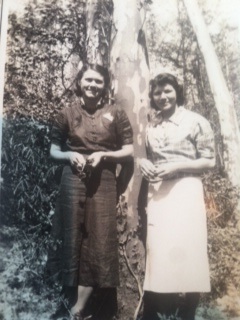
There were 3 Strong sisters: Hazel, Delta and Lois – and in addition to living up to their name, they were many things: independent, loving, resourceful, giving, intrepid, curious. Each lived longer and more actively than many of us either choose to or have opportunity to. And while they always demurred when I asked them what the secret was, I was around each long enough to know it was in the way they embraced life and change. Few women in the 1930’s went to college — paying for it with their own work, I might add — and did so boldly, without apology, without fear. But they did.
They also made many of their own clothes, grew their own vegetables, taught hundreds of school children, raised families, started businesses, and traveled the globe. So many people growing up in poor, rural communities today, nevermind in the 1920s and 1930s, are not able to think of the world and all its opportunities as their own. I’m not sure how these daughters of a small-time and largely itinerant farmer in rural East Texas tapped that so long ago — I know they had solid, hard working god-fearing parents who taught them the importance of bettering themselves and giving back. But I think there must have been a little magic of uniquely good genes involved too (did I mention that two of them didn’t see their jet black hair go grey until their 80’s, and the other sported killer gams her whole life?). It was the hope to tap those magic genes that inspired me to name my daughter Charlotte Strong.
But they were different, too. Hazel, the oldest and my grandmother, the businesswoman, the civic leader, frugal, hard working, insisting on Latin names for plants, constantly teaching – from adult literacy to immigrants, to Bible verses to school children, to teaching me how to sew a quilt, how to find the forest fern that curls up when you touch it, how to take care of myself on my own. Her lips were usually narrowed in a tight and thin straight line — as much due to her natural expression as to the row of straight pins she was forever holding there while she custom-hemmed Wranglers at Cooper’s Cowboy Store.  She also fiercely believed that adventure and fun were worth anything – so long as it was educational.  She took me on long college hunting trips around the country and made sure I found a way to study abroad and travel in my early 20’s, changing the course of my life for the better. Sweet Dell, the middle sister, so doting and kind, devoted to her family, to educating mentally handicapped children for generations, to the well being and regular nurturing of her friends and loved ones through frequent note cards with Audubon prints on the front, her spidery handwriting inquiring inside. Dell, herself an entrepreneur in antiques, gentle but strong, positive and bubbly and chatty, eager to refill your iced tea and remember to ask after those terrible allergies you had last season. Lois, the youngest, the basketball coach who told me when she was 82 that what she’d really wanted to be all along was a geologist. Lois with her wry humor, voracious appetite for LSU football (“If the Tigers don’t complete this play, I’m going to need a nerve pill!”), her frank and straightforward manner, her love of travel and curiosity for new people, places, adventure.  Lois who never seemed like an old lady – who once, towards the end, when I was worried about her driving and hemmed and hawed, “oh, just hop in with me. I love to drive!” narrowed her eyes and said, “How about we say what we mean, dear.”


This morning my Aunt Dell passed away. She was the last of the three Strong sisters, and while it was a mercy for her to find peace at 97, her absence leaves a hole. We were already close, but when my grandmother died, she took me in as her own. I’d make the drive to Mansfield and zip up in one of her housecoats to have coffee with her or we’d paint our toenails or eat taco soup or tea cakes, and she would give me photos and old letters, knowing I didn’t have many family things. We’d laugh mainly – over old stories she’d relate or ones about my kids’ latest antics she’d prod me to tell. Always, she loved to laugh. I’m remembering her telling me, nearing her mid-80’s, that she was giving up her line-dancing troupe (they danced at nursing homes to cheer up “the old folks”). She laughed and said, “Hazel told me, ‘watch out, when you hit 85, you just start to feel a little bit old.’”

And always, she told me she loved me. On Sunday, I got to hold her hand and tell her goodbye. I sang her a lullaby from her mother, my great grandmother, that had come to me all the way down through my mother.  Over in Killarney, many years ago, my mother sang a song to me, with accent sweet and low. Just a plain and simple ditty, in her sweet old fashioned way, and I’d give the world if she could sing that song for me today.  I stroked her hand with her familiar fine and elegant oval fingernails, the same as my grandmother’s, my eyes filling as I sang these words my mother sang me, her mother sang her. I was telling her it was okay to go at that same time I sang a song about longing for your mother, at the same time as I strained against the inevitability of losing this beloved aunt, a precious link to my own mother, a thread so heartbreakingly tensile and fragile, all at once.

What else can we do in those moments?

Families have their own mythologies and ideologies, just like nations and cultures. In my family, the Strong sisters, in reality and in notion, formed the backbone to our family story. They are so much of how we envision ourselves, or at least aspire to be, collectively and individually. When we cousins see each other, we talk about their example, the way they lived for so long, each of them so fiercely independent, so inventively smart and creatively resourceful, so focused in their love. We retell their childhood and early adulthood stories, which have now become larger than life. And I can only speak for myself in saying that I have imprinted on me their code: Work hard, Keep learning, Respect the earth, Be of service, Dedicate yourself to friends and family.

Aunt Dell was 97. It didn’t feel shocking and untimely like so many deaths do, like my Mom’s did 24 years ago. But her passing, like the passing of Hazel and Lois, is still a great loss to me, and I think to this world. The strength of the Strong girls wasn’t in flashy jobs or published works or even notoriety that existed beyond these little north Louisiana towns. But each of them bravely found her own enrichment, stood up to bullies, raised her children to be kind, found a way to help people who needed help, and – critically, I believe – stayed open and curious to an unfolding life of their own making, full and rich, and above all — strong.

Seeing through the glass darkly: When carpe diem means acknowledging it sucks

I’m going to come right out and say it: There is a national cult of self-improvement and a tyrannical myth of work/life balance working together like a couple of snake-oil salesmen to convince us that harmony is the mountaintop – the glittering, Pinterest-montaged goal. But frankly, I think complexity and contradiction get a bad rap. There can be an order there, among seeming disharmony — something much more nourishing than the soundbite, the silver lining or even the catalytic new thing.

Maybe I’m grumpy because last week, I had the unusual experience of being laid out half-flat by a migraine for six days straight. “Half-flat” because it was a dull migraine, not acute, but pressing thick and heavy from behind the wall of skull at my forehead, bruising hair follicles, ruching up the muscles in my neck like a mid-life mother of three’s my tankini. But not so bad I couldn’t work, couldn’t function. So I shuffled along, doing the essential at about one-fourth the pace, drinking gallons of water and dutifully turning in 9pm each night.  It was like stumbling around in a small, dark room, this migraine, feeling for furniture, trying in vain to find the switch on the wall.

Once, half way through, a medicine worked and I caught a four–hour reprieve. I emerged like one of the locked-in characters from Awakenings, leaping up from my bent crone position to quickly run a gazillion errands, practice yoga, finish work projects, return phone calls. After several hours the drug wore off, and just like Robin Williams’ patients, I slipped back into my semi-vegetative state and retreated bitterly to bed. So frustrated by my lack of energy, of ability, that I would have cried had it not hurt so bad. Thankfully, this was just a headache, just a week.

My main takeaway from this, lit somewhat dimly during, but shining especially afterwards was sheer euphoric gratitude for how good I feel nearly all of the time and what a particular hell chronic pain, chronic illness must be.  With my brain moving like a slug across sandpaper, it slowly dawned on me that the deeper issue here – what I was truly grateful for – was a recognition, like a slap across the face, of what I ­could do and think and say when I felt like myself. In short, the experience made me freshly and acutely aware of my own Aliveness.

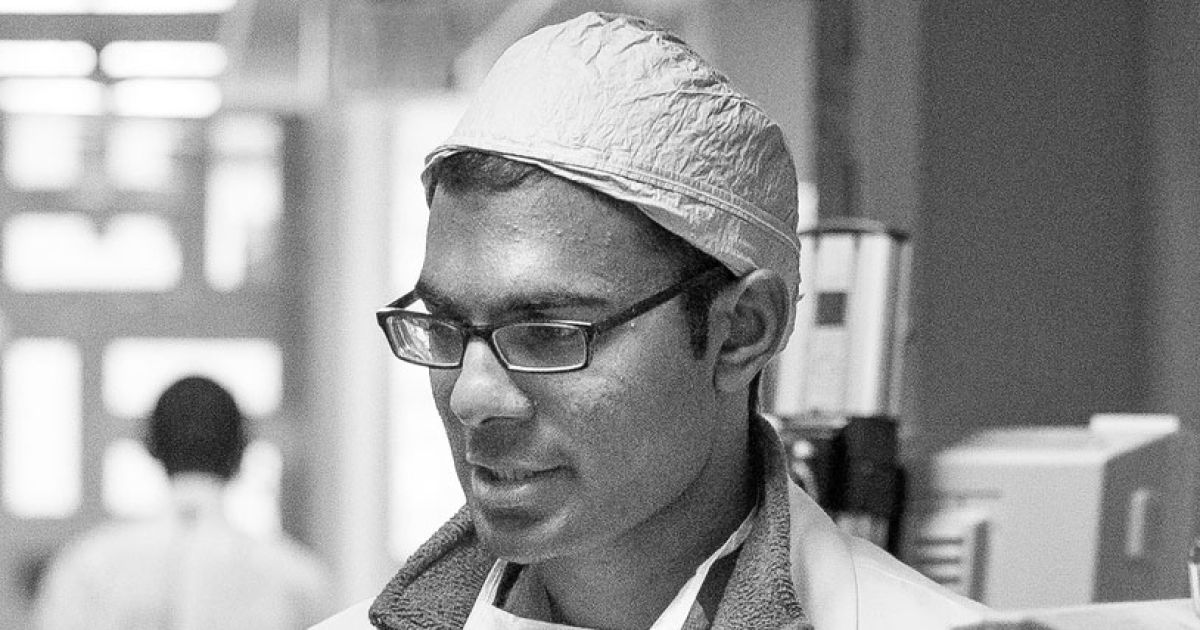
I should add that when I was able, I was reading When Breath Becomes Air by Paul Kalanithi, a clear-eyed and poignant memoir by a literature-loving brilliant young neurosurgeon, who devoted his intellectual career to understanding where life’s meaning and the brain’s working intersect.  But where that intersection finally revealed itself to him was not through his work, but through his own terminal diagnosis of lung and brain cancer at 36.  Light summer reading.

Kalanithi wrote, “I began to realize that coming face to face with my mortality, in a sense, had changed nothing and everything… my understanding that I was going to die someday, became an understanding that I was going to die — some day.”

Kalanithi-excerpt-2-1200x630-1452612130
Paul Kalanithi, 1977-2015

What changed was Paul Kalanithi’s attention. What we put our attention into noticing in (and about) the world, is who we are in the world. But true attention is not passive – it is curious, searching, learning, understanding. Waking up to our lives certainly requires attention – an attention that must be actively fed and directed, because it, too, is complex and contradictory, sometimes fractious, other times bored and tedious.  Mary Oliver said of her learning curve to describe nature in her poems, “Attention without feeling … is only a report.”

Exploring this is helping me forgive myself for how hard I find it to carpe diem, to wake up to the present, precious moment as a working mother of small children.

Let me back up a bit.

When I think of defining attention in this intentional and dynamic way, I think of Maria Popova’s discussion of the relationship between critical thinking and hope. Popova, founder and curator of the national treasure that is Brain Pickings, said in an interview with On Being that hope and critical thinking must be bridged.  Each, on their own, leads to resignation and emptiness — critical thinking, without a fixed star to guide and inspire, and hope through its lack of a motivation to apply ourselves and make things better. Critical thinking alone becomes embittered, and hope alone is naïve.  But together, we are able to face the complexity and rush of aliveness in a more sustaining way.

Very often kindly older folks pass me in the grocery store when my toddler is smeared in something sticky and gleefully chanting, “Butt! Butt! Butt!” and my twins are whining for Red Dye No. 4 This and Bisphenol A That, and these wistful onlookers wink and say, “Cherish every moment. They grow up so fast” — and it absofuckinglutely makes my eye twitch.  I know they mean well, of course.  But the act of trying to savor that moment in the grocery when I don’t want to make eye contact with anyone is crazy-making. And yet I feel compelled to try and… of course inevitably fail.  The failure is painful because there is layered stress in imagining a Future Me, lonely and chronically cold, perhaps eating cat food (if present day savings are any indication), remembering those grocery store meltdowns and longing for them again.   So with this lonely old future fictional future self in mind, I grit my teeth in the checkout and try to DOUBLE DOWN ON APPRECIATING THE PRESENT.  But, of course, this doesn’t work.   Why not?

Because it’s hope without critical thinking; it’s trying to erase contradiction and entropy and messiness in a singleminded and mythical pursuit of harmony.  It’s buying the snake oil!

Popova writes of Alfred Kazin, the great Jewish-American writer and literary critic, on embracing contradiction and how the sacredness of human attention shapes our reality.  She quotes Kazin from his Journals, “A thinker (like [Ralph Waldo Emerson]) misleads us as soon as he promotes harmony as the exclusive goal, and especially misleads us when he preaches harmony as a method. Man’s life is full of contradiction and he must be; we see through a glass darkly — we want more than we can have; we see more than we can understand. But a contradiction that is faced leads to true knowledge… Contradictions are on the surface, the symbols of deeper and more fertile forces that can unleash the most marvelous energy when they are embraced. Never try to achieve ‘order,’ sacrifice symmetry — seek to relate all these antagonistic forces, not to let the elimination of one to the other.”

Kazin was writing in the 1940’s and 50’s, but how much MORE true is this today?  So often we seek to improve ourselves without ennobling ourselves, squirming away from any worldview that requires a full color palette – rather than the dualistic black and white.  But the world itself is technicolor and maddeningly, heartbreakingly complex.

2008-2-8-mary-oliver-hi-res
“Isn’t it wonderful the way the world holds both the deeply serious, and the unexpectedly mirthful?” – Mary Oliver

Finding myself now in this middle generation, I watch the generation ahead transition from experiencing mortality as largely quick, surprising tragedies to slow, inevitable disease, the drawn out battles, hospice.  At the same moment my children are coming into consciousness with the world, starting to play with independence and all its inherent risks- and their own sense of invincibility.  Is this midlife? It’s true, I do have a ruched tankini (It clearly signifies the dual messages – “I’m still young!” AND – “Fare the well, bare midriff!”). How can I hold both in my hands?  How can I fully clock the “Here it is. Here it awaits. Learn from it” that Paul Kalanithi points to – while being in the world and light and playful?  I think the essential duality of critical thought and hope – and the bridge they forge across the central valley of adulting – must be the path.

And the vehicle is complexity and contradiction. Why else do some of our most vivid and bright memories involve crisis? I go back in my mind so often to taking my twin four-year-olds to Vermont, to a friend’s remote mountain cabin during a difficult period in my life. I would bang sticks and shout as I went out to the woodpile every night to scare away the brown recluse spiders and made sure to sing loudly picking raspberries in case bears were near. At night, I put the kids in bed and read or journaled by the fire for hours. I was alone in that sensory-heightened way you are when taking care of small children without another grown up around, in one of the great dark intersections of my life, and every moment of it shines in my memory, bright and distinct. Indeed, that Vermont cabin has become my happy place, what I fondly remember again and again.

Bringing critical thought and hope to the table of contradiction awakens Aliveness. But I forget this nearly all of the time. Nearly all of the time, I am under the dull, stress-y migraine cloud, the sleepwalking selfhood in my habitual patterns and tired little vaudeville routine. Yet – beneath it, even more consistently, is this tension, this longing for transformative awakening.

Thank God life is constantly handing me plenty of messy, contentious little opportunities to enter more deeply into my own existence, to embrace it more wholly, to look in the eyes of that stranger in the grocery store and say, “Yes, this moment – this dumpster fire of a family outing – sucks. And I am in it, I am seizing it, I am wrestling to embrace it, and you are right, I am sure I will miss it too.”


Making sense of sea stars

I went to bed last night, thinking

of George Carter, the boy in New Orleans

who advocated for food justice and built community gardens,

who spoke at 15 about the cool peace and refuge they offered

and the warm taste of strawberries,

just before he was shot and killed by a gangbanger’s stray bullet.

I went to bed last night, thinking

about Baton Rouge Officer Montrell Jackson,

who said, “I swear to God I love this city,

but sometimes I wonder if this city loves me,”

who posted his offering of a hug or prayer

nine days before he was killed by someone who clearly needed both.

I went to bed last night, thinking

about Colonel Samuel Mims, who fought

the open burn of chemical explosives in Camp Minden, Louisiana

and said, “I am always a little irritated,

but when the government wants to poison my air

and send the children of this state to St. Jude’s,

I get downright pissed.”


I kicked at the sheets and thought, too,

of the mysteries of the starfish

– “sea stars” the scientists would say –

how occasionally it breaks itself,

and no one knows why.

one ray just twists off, and walks away,

sometimes in response to a predator or stimulus,

but just as often not.

The sea star’s self-breakage is at once passive and violent,

the main portion of its body suctioned tight, while the

separatist ray twists and turns at right angles,

until this amputation is complete.


There is much I don’t understand in this world, in this time.

How to find order in what seems senseless.

How we can’t keep a boy who loves strawberries safe.

I thrash around under my grandmother’s quilt and

Try to grab a fistful of meaning in the long arc of the moral universe,

the essential and enduring kindness I see sparked by so many,

the musings of marine biologist Ed Ricketts, who said,

“it would seem

that in an animal that deliberately pulls itself apart,

we have the very acme of something or other.”


We must, else what is the alternative?

Sawa Bona: I see you

Griefs are different. Some are private, some are public, some are communal, some are isolating, some are even beloved, others of course despised; some sneak up on you as you are walking to your car on a Tuesday to sucker punch you in the gut, doubling you breathlessly in two without so much as a warning — others wrap around you in a hot, heavy creep like a wet wool in July.

When you lose a pet– your favorite dog, say, there is no recognition for your pain, no casseroles and time off work. You are meant to continue as normal, because to the outside world you are, even though there’s been a hole blown out of your center.  The grief is so intensely private that there is also pain in its lack of recognition; there is a grief about the grief.  And sometimes the pain of the Meta Grief becomes the one that guts us.

It’s true for communal griefs, too, the ones that happen to us as a collective – a family, a community, a city, a nation.  And when those are not grieved and metabolized collectively, then there is the same palimpsest of layered griefs.  The same double whammy of trauma. I am thinking about Orlando again, and also about Alton and Philando and the five police officers serving in Dallas, and I am also thinking about my uncle’s suicide.  Nevermind they all involved guns, forget the whole gun “debate” for just now.  When a communal loss doesn’t find common ground and collective healing expression – through communication or ritual or some other means – there is additional pain.

My uncle’s suicide was shocking, as I imagine they nearly all are, despite the previous attempts and his ongoing depression.  But it was almost just as painful that my family didn’t talk about why he did it, that we didn’t replay together the weeks before, or that we don’t bring him up fluently, easily, at family gatherings since.  I don’t blame them – I wasn’t as vocal as I could have been either. It hurts to do that. It hurts with a rawness that’s sharp and confusing – Why bring it up if we can’t see clear to where that kind of conversation might go? It was easier for us to talk about my father, who died 6 months before my uncle took his own life. Though acutely painful in its own right, we understand how to place his death – aortic dissection, terrible tragedy, so mercifully quick – and therefore place his life and his legacy. But Donnie – how do we make sense of that? And so, there’s been little to no discussion, and that silence — for me anyway– has been its own jagged rending and a separate grief.

When I starting writing this piece, I wrote “Orlando and whatever the next mass shooting will be is not so different, though it’s less personal.”  When I opened the doc one week later I had to edit that sentence, because I now know the names of those next tragedies.  And what fresh hell is next?

Social media is very loud and hot and crowded right now.  There’s a lot of talking, a lot of writing.  We are all hungry and anxious and needy and pissed, and the buffet is overwhelmingly huge and not very nourishing. I don’t know that many words can nourish right now, and I don’t presume mine can, though the act of continuing to talk, continuing to try, even if there’s more chaff than grains in our words, has got to lead to progress.  And also because I do think there are a few words out there that can restore us, bringing us back to our humanity and helping to reconcile what has been torn for so long.  I know three in particular.

Recently, I was introduced to a South African (zulu) greeting, “Sawa Bona.” We have no direct translation, but it essentially means, in the deepest sense, “I see you.”  I see all of you, I hear you, I witness you, I am looking at you without getting my own self in the way. The respondent says, “Sikhona,” meaning “I am here.”  But it’s deeper than that. I means: I am here because you see me. I exist as a human because you have paused long enough to witness my humanness.  My identity depends on and is given agency by your seeing me. So, now, because you see me — I am here.

The listener is more than active – her listening actually gives voice to the speaker. This level of listening and witnessing is a powerful tonic to validate and soothe this grief of unacknowledged pain and injustice of being invisible. The double trauma becomes single trauma, which God knows is still hard enough as our country limps along.

Last week Kellon Nixon was just this guy, this week he’s the eloquent father who was an eyewitness to the vigil in Dallas because he wanted to be a part of healing and lend his voice to support the memories of Castile and Sterling, and was quoted by a Huffington Post reporter.  He said, “You start to think that it’s me against the world. And with that type of mentality, we’ll implode not just as an ethnicity, but as a people, period…. You get to feeling that only my and my family’s life matters, and I knew I had to recover from that spiritually.

Nixon realized, as all of us must, that the only way to be whole is to look at someone else, particularly someone different, wide enough and open enough to say, “Sawa Bona.” I see you.

“Sikhona.” I am here.

My niece and I were talking this morning on the beach, while we slowly packed sand into sand castles for my toddler to systematically pound into smithereens, about what it feels like for her right now as a college student in Baton Rouge. We talked about the confusing messages about public safety she’s getting. We built moats and drawbridges and talked about how she has to weigh what makes good common sense and where messages might be rooted in this institutionalized racism and otherism we’ve cemented, and how fear!fear!fear! can drive our basest selves.

I thought later about how we don’t have a roadmap for this, culturally.  We know emergency response, we know status quo, we know crisis communications, we can architect and engineer and construct the shit out of anything from a viral social media campaign to an interstate highway system to 3-D printing human tissue, but healing?  Reparations? No.  We don’t even have an English word for the concept of conveying identity by way of seeing another’s humanness.

I should say, “Yet.” We don’t have it yet.

A good friend, who’s black, told me that when he once cut his forehead, he wife, who’s white, upon applying the Bandaid, noticed where the skin split and the blood beneath showed and remarked, “It’s less than 1/8th of an inch. All this division and fuss for less than 1/8th of an inch.”

I can’t get this little story out of my head.  How can we miss seeing each other at such a basic level?  And how much extra pain do we cause in the not-seeing?

There are many griefs: there are some griefs so quiet and subtle, so suffocatingly personal — perhaps a life lived not all how you intended, or a passion subverted and tamped down — and some griefs so cataclysmic and big and singular that our entire life is marked in a  B.C./A.D. fashion around the loss. But they are all organic. All entities, nearly living, and requiring care, boundaries, tending, like any child.  But I think the grief of unacknowledgment, the terrible inequity of being unseen, is parasitic.  It feeds on us, depriving us of what we need most, until we, fatally, don’t see ourselves.

How often have I looked at someone without looking at them? Way more often than not.  How often am I surprised by someone’s complexity and goodness once I enter, openly, into conversation?  Every single damn time.  We heal in others what hurts the most in our own lives, and through that virtuous cycle we find a welcoming balm. A balm in the neglected mudroom of the heart. A balm in our own most personal and unexpected places.

Our national poet laureate said this just two days ago, far more simply and beautifully:

@ the Crossroads—A Sudden American Poem


       RIP Philando Castile, Alton Sterling, Dallas police
officers Lorne Ahrens, Michael Krol, Michael J. Smith,
Brent Thompson, and Patrick Zamarripa
—and all
their families. And to all those injured.


Let us celebrate the lives of all

As we reflect & pray & meditate on their brutal deaths

Let us celebrate those who marched at night who spoke of peace

& chanted Black Lives Matter

Let us celebrate the officers dressed in Blues ready to protect

Let us know the departed as we did not know them before—their faces,

Bodies, names—what they loved, their words, the stories they often spoke

Before we return to the usual business of our days, let us know their lives intimately

Let us take this moment & impossible as this may sound—let us find 

The beauty in their lives in the midst of their sudden & never imagined vanishing
Let us consider the Dallas shooter—what made him

what happened in Afghanistan

what
flames burned inside
(Who was that man in Baton Rouge with a red shirt selling CDs in the parking lot

Who was that man in Minnesota toppled on the car seat with a perforated arm 

& a continent-shaped flood of blood on his white T who was

That man prone & gone by the night pillar of El Centro College in Dallas)
This could be the first step

in the new evaluation of our society    This could be

the first step of all of our lives